

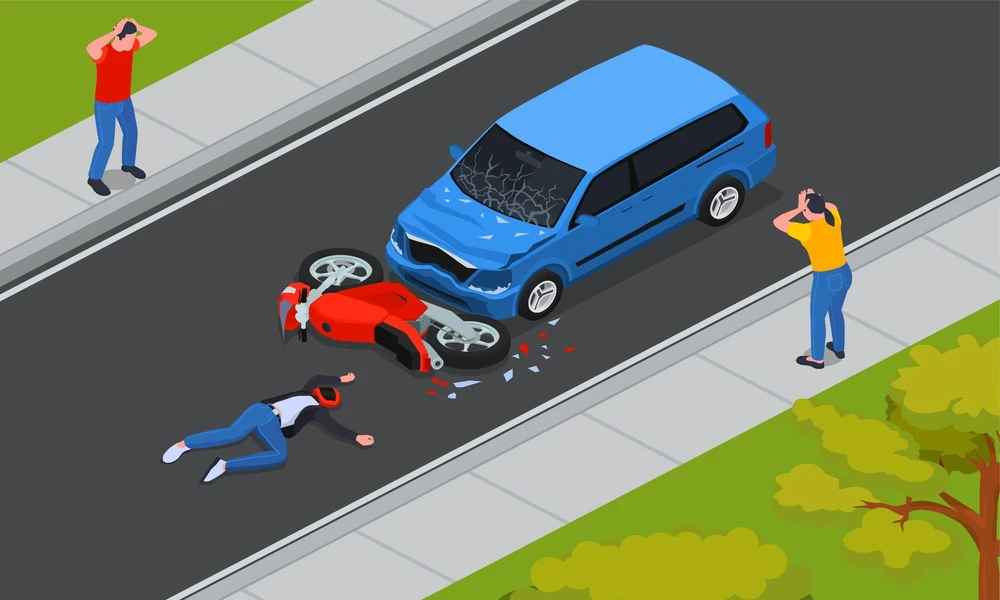
These days, seeing Uber or Lyft cars on the streets of California cities has become so common that we almost forget a fairly complex legal framework lies behind this convenient ride, especially because of California’s own rideshare laws and recent insurance reforms. A rideshare accident is different from an ordinary car accident because multiple parties are involved: the driver, the rideshare company, the other driver, and multiple insurance companies. From the moment of the accident to a possible lawsuit, here is exactly what legal steps happen in California, laid out below.
Step 1: The Legal Process Begins the Moment the Accident Happens
The foundation of the legal process is built right at the scene of the accident. The information gathered at this time later becomes the main basis for determining liability and pursuing a compensation claim. Below is a detailed discussion of four important types of evidence and processes:
Police Report and Legal Process
The most important official document for any legal fight or insurance claim after an accident is the police report. After an accident, you need to quickly file a report at the nearest police station, or in serious cases, a formal report of the incident. A police officer arrives, measures the scene, checks the position of the vehicles and the brake marks (skid marks), and prepares a rough sketch and report. The police take statements from both parties and any eyewitnesses and issue a preliminary determination of whose negligence caused the accident, which later serves as a primary legal basis in court or with the insurance company.
Scene Evidence
Courts and insurance companies always rely on visual evidence. Evidence gathered at the scene helps resolve the legal process faster. The position of the vehicles involved in the accident, which parts of the vehicles were damaged, the condition of the road, and photos of the traffic signals all confirm the legal facts. The driver’s license and any dashcam or CCTV footage from inside or around the vehicle, if available, are accepted as irrefutable evidence in the legal process. It is important to collect the names and phone numbers of nearby pedestrians or other drivers. Later, in the legal investigation, their neutral testimony plays a major role in proving the driver’s negligence.
App Data and Digital Tracking
In the case of a rideshare accident, this adds a major legal advantage compared to an ordinary accident. App data cannot be altered in any way. The app’s server keeps a precise digital record of the driver’s exact speed, whether they were going the wrong way in violation of traffic law, or whether they braked or turned suddenly. This data proves whether, at the exact second of the accident, the driver was “online” on the rideshare app or was “on a live trip” with a passenger. This determines whether the compensation will come from the rideshare company’s commercial insurance or from the driver’s personal insurance. Lawyers can subpoena this digital log or data from the rideshare company through the court, and it is one of the biggest tools for proving the driver’s negligence.
Medical Records and Proof of Physical Harm
How much compensation is awarded depends entirely on medical documentation and the depth of the physical and mental injury. How soon after the accident the victim went to the hospital, and what injuries the emergency room doctor documented, forms the first legal link. This proves that the injury occurred because of the accident, not because of some pre-existing condition or issue.
Ambulance costs, hospital cabin and ICU bills, operation costs, medication receipts, and therapy costs form the main basis for future Economic Damages claims. A medical certificate from a civil surgeon or an approved government hospital doctor is presented in court as legal proof of physical disability.
Step 2: Legal Liability Is Determined
Under California’s Personal Injury Law and the Pure Comparative Negligence principle, here is a detailed discussion of how the fault of drivers and the partial liability of multiple parties are legally evaluated in rideshare accidents:
The Rideshare Driver’s Sole or Primary Fault
If the accident happened entirely because of the negligence of the Uber or Lyft driver, then under California law, full liability falls on them. If the driver was distracted because they were looking for a trip on the app or texting while driving, ran a traffic signal, or was driving at excessive speed, they are identified as the primary at fault party. In this situation, if the driver was on a live trip with a passenger, the rideshare company’s one million dollar commercial insurance is activated, and the injured passenger, the affected driver of another vehicle, or a pedestrian can claim full compensation from this insurance.
The Other Driver’s Fault (Third Party)
Sometimes the accident does not happen because of the rideshare driver’s mistake, but rather because of the negligence of another vehicle’s driver. For example, you are a passenger sitting in the back seat of an Uber or Lyft, and another ordinary vehicle hits your rideshare car from behind (rear end collision). In this case, in legal terms, that other vehicle’s driver is called the “third party” or the at fault party. Under California law, as a rideshare passenger you are entirely blameless, so your compensation will come from that at fault other driver’s personal auto insurance.
Partial Liability of Multiple Parties and the Comparative Negligence Principle
The most complex situation in California arises when multiple parties are partially or jointly at fault in an accident. Under California’s “pure comparative negligence” principle, the court or insurance adjusters investigate the accident and assign each involved party a specific percentage of fault. For example, at an intersection, the rideshare driver violated the speed limit (70% at fault), but the driver of another vehicle coming from another direction also made a quick turn without fully obeying the signal (30% at fault). In this case, both drivers are legally liable for each other’s damages in proportion to their share of fault.
The Victim’s Own Partial Fault and Deduction from Compensation
If you are not a rideshare passenger but the driver of another vehicle, and your vehicle collides with an Uber or Lyft car, the insurance company will try to find out whether you were also partly at fault. Suppose the rideshare driver was 80% at fault in the accident, but you were also 20% at fault (for example, you did not signal or indicate your turn on time). Under California law, having some fault of your own does not mean you lose your right to compensation. However, if the court determines your total damages at 100,000 dollars, then 20,000 dollars will be deducted because of your own 20% fault, and you will receive a maximum of 80,000 dollars in compensation.
Step 3: Insurance Coverage Is Determined According to Insurance Law
Under California law, the amount of insurance coverage or compensation after a rideshare accident is determined based on the driver’s “app status,” meaning which phase the driver was in at the exact moment of the accident. Under California Public Utilities Code Section 5433 and recent legal reforms, this process is mainly divided into 4 phases:
Period 0, Offline
The driver is not logged into the app or is offline. If an accident happens in this state, no commercial insurance from the rideshare company applies here. Compensation comes from the driver’s own personal auto insurance. Under California law, drivers’ own insurance must have at least 30,000 dollars (per person bodily injury), 60,000 dollars (per accident), and 15,000 dollars (property damage) in coverage.
Period 1, App On, Waiting
The driver is online on the app, but no passenger has booked or accepted their ride yet. If an accident happens in this state, the rideshare company provides a contingent or third party liability insurance. Its coverage limits are:
50,000 dollars: for each injured person’s medical treatment. 100,000 dollars: for total bodily injury per accident. 30,000 dollars: for property damage.
Under California law, companies must maintain up to an additional 200,000 dollars in excess liability coverage for serious accidents.
Period 2 and 3, Active Trip
The driver has set out to pick up a passenger (en route) or the passenger is already inside the vehicle. During this time, the rideshare company’s main commercial insurance is activated. If an accident happens because of the driver’s fault, the company provides up to 1,000,000 dollars (1 million dollars) in primary third party liability coverage, which covers compensation for the passenger, pedestrians, or the driver of another vehicle.
New Insurance Laws (SB 371 and AB 1340)
Under the new laws now in effect in California, major changes have been made to Uninsured/Underinsured Motorist (UM/UIM) coverage:
What it used to be: If another uninsured or underinsured vehicle hit your Uber or Lyft, the company used to pay up to 1 million dollars in compensation.
The current rule: Under the new reform, this protection limit has been reduced by 70%. Now, if the other driver has no insurance, you can receive up to a maximum of 60,000 dollars per person and 300,000 dollars per accident in UM/UIM coverage from the rideshare company.
In addition, for driver safety, under Proposition 22 (Prop 22), up to 1,000,000 dollars in occupational accident coverage is provided, which helps cover medical costs for on duty drivers at the time of an accident (regardless of who was at fault).
Step 4: The Legal Process for Filing a Compensation Claim Begins
The legal process for filing a compensation claim after a rideshare accident in California is extremely time sensitive and procedural. Under California’s Personal Injury Law and insurance regulations, here in detail is how the legal process for a compensation claim begins and is carried out step by step.
Initial Documentation of the Incident and Preparing the Police Report
The legal process essentially begins right at the scene of the accident. Under the California Vehicle Code, if anyone is injured or killed in an accident, the police must be notified immediately. The police will arrive and prepare a Traffic Collision Report, which is the primary basis for the legal claim. If the accident causes more than 1,000 dollars in property damage or anyone is injured, then under California law, the accident must be reported to the Department of Motor Vehicles (DMV) within 10 days using an “SR-1” form.
Starting Medical Treatment and an Injury Journal
To legally determine the amount of your compensation, written proof from a doctor or medical records are essential. Right after the accident (within a maximum of 48 to 72 hours), you must go to a hospital or emergency room in California to get examined. You need to complete the full prescription and therapy instructions given by the doctor, because if there is any gap in between, the insurance company may claim that your injury was not serious.
Sending Notification to the Rideshare Company and Insurance Provider
This is not a formal lawsuit, but rather an initial legal notice. You need to quickly report the accident through the “Help” or “Trip Issues” option in the Uber or Lyft app. After you report it, a representative from the rideshare company’s insurance will contact you. Under California law, at this stage you are not required to give any recorded statement or written testimony, and giving one without a lawyer’s advice can reduce the amount of your compensation.
Hiring a Personal Injury Lawyer
Rideshare law in California is extremely complex, especially because of the different phases of coverage and the recent changes to the Uninsured/Underinsured Motorist (UM/UIM) law. So it is safer to move the legal process forward through an experienced personal injury lawyer. Most lawyers in California do not charge any upfront fee; they only take a certain portion (usually 33% to 40%) as a fee once your compensation is recovered, which is called a contingency fee.
Sending a Demand Letter
After your treatment is finished, or once your health condition has stabilized (Maximum Medical Improvement, MMI), the lawyer will begin the main stage of the legal process. The lawyer will prepare a formal demand letter and send it to the Uber or Lyft insurance company. This letter describes the accident, the proof of the driver’s fault (liability), all medical bills, lost wages from time away from work, and the physical and mental suffering, and demands a specific amount of compensation.
Settlement Versus Filing a Formal Lawsuit
In California, about 95% of rideshare accidents are resolved out of court through a demand letter and negotiation with the insurance company. However, if the insurance company completely refuses to provide adequate compensation, then your lawyer will file a formal personal injury lawsuit in the relevant California County Superior Court.
Step 5: Facing Legal Complications and Obstacles
After a rideshare accident in California, victims have to face several complex legal obstacles and tactics. Insurance companies and rideshare organizations use various loopholes in California law to reduce their financial liability. Below is a detailed discussion of these legal complications and obstacles.
Legal Complications Related to the Driver’s Employment Status (Prop 22)
Because of California’s widely discussed Proposition 22 (Prop 22) law, Uber and Lyft drivers are not “employees” of the company, but rather “independent contractors.” In legal terms, this is called being contrary to the Respondeat Superior principle. This means that for a major mistake by the driver, you cannot directly sue Uber or Lyft as the primary responsible party. You mainly have to rely on their insurance policy, which makes the legal fight far more limited.
Disputes Over the Level or “Phase” of Insurance Coverage
Insurance companies try to make the moment of the accident appear vague or unclear. If the driver had the app on but was waiting for a ride (Phase 1), the coverage amount is a maximum of 50,000 dollars. But if a passenger was in the car (Phase 3), it reaches up to 1 million dollars. Insurance adjusters try to use the smallest error in the digital log or a network drop in the app to prove that the driver was not on an active trip at the time of the accident, so that they can get away with paying less compensation.
The “Login Logout” Dispute and the Conflict Between Personal and Commercial Insurance
After an accident happens, a legal “ping pong” game begins between the rideshare company’s insurance and the driver’s personal insurance company. The driver’s personal insurance company claims that since the driver was driving for a commercial purpose, they will not pay any compensation. On the other hand, the rideshare company’s insurance may claim that the driver was not active on the app at that time. Because of this legal back and forth between the two insurance companies trying to avoid liability, the victim’s medical treatment and compensation can remain stuck for months.
The Trap of a Harmful “Recorded Statement” or Testimony
Right after an accident, rideshare insurance representatives call the victim and behave in an extremely sympathetic manner. Through legal cunning, they record a “recorded statement” or verbal testimony. In this conversation, careless remarks such as “I’m fine now” or “I had to brake suddenly” can be presented as evidence in a California court, and they use it to deny the seriousness of the victim’s physical injury and to seek rejection of the compensation claim.
Misuse of the Comparative Negligence Principle
Since California is a Pure Comparative Negligence state, the insurance company’s lawyers will make a legal effort to shift all or part of the blame for the accident away from the rideshare driver or the other party and onto you. If you are the driver of another vehicle or a pedestrian, they will try to prove that you were careless or did not follow the speed limit. If they can prove even 20% to 30% fault on your part, they can deduct that amount from your total compensation.
The Recent Sharp Reduction in Insurance Protection (New UM/UIM Laws)
As a result of California’s recent legal reforms, the rideshare company’s protection has become much more limited if an accident is caused by an uninsured or underinsured driver. Where protection of up to 1 million dollars used to be available, under the new rules it has been reduced to a maximum of 60,000 dollars per person. If your injury is extremely serious or long term, this new legal limitation may prevent you from receiving adequate compensation.
Step 6: The Legal Deadline for Filing a Lawsuit Applies
Here, briefly, is the legal deadline (statute of limitations) for filing a lawsuit after a rideshare accident in California:
- Personal Injury: If injured in the accident, you have a maximum of 2 years from the day of the accident to file a lawsuit for medical treatment and compensation.
- Property Damage: You have a maximum of 3 years to file a lawsuit seeking compensation for damage to your vehicle or belongings.
- Government Claims: If the accident happens with a government bus or a city agency vehicle, you must file an administrative claim within only 6 months.
- For Minors: If the injured person is under 18 years old, the 2 year time limit begins counting from the day they turn 18.
Step 7: Moving the Lawsuit Forward Through a Lawyer, If Needed
The process of moving a lawsuit forward through a lawyer after a rideshare accident in California mainly begins through a specific legal strategy. First, an experienced personal injury lawyer evaluates your case under a “contingency fee” or contract based model, where you do not have to pay any fee upfront until you win the case and receive compensation. As soon as they take on the case, the lawyer goes into the field with their own investigation team, gathering CCTV footage of the accident scene and eyewitness testimony, and also sends a special legal notice to subpoena the driver’s exact GPS speed and digital log at the moment of the accident from the Uber or Lyft company’s servers. If the rideshare insurance company refuses to provide adequate compensation in the initial discussions, the lawyer files a formal civil lawsuit in the relevant California County Superior Court and sends a legal summons to the defendant.
After the lawsuit is filed, an extremely important legal stage called “discovery,” or the exchange of information, begins. In this process, the lawyers for both sides are legally required to exchange all documents related to the case, and under this, a “deposition” or face to face testimony stage is conducted, in which the driver and the victim must, under oath, disclose the facts of the incident in front of the lawyers. However, before going to a final trial, California courts direct both sides to go through “mediation” or alternative dispute resolution under a neutral mediator. Facing the strong evidence gathered by your lawyer, most insurance companies settle the case out of court during this mediation stage by paying a substantial amount of compensation, in order to avoid a large court penalty or a long legal fight.
If, for any reason, this mediation or settlement process fails, the lawyer takes the case to a final trial in front of a 12 member jury board. In court, your lawyer presents all the gathered digital tracking data, the opinions of accident reconstruction experts, and doctors’ medical certificates in front of the jury, fighting to prove the driver’s or the company’s negligence completely. The jury board thoroughly reviews the arguments and evidence from both sides, announces a final verdict, and determines the specific financial amount of compensation by considering your medical bills, lost wages, and the depth of your mental trauma.
Final Word
What legally happens after a rideshare accident is by no means a straightforward, linear process; multiple complications lie hidden at every step. In California in particular, because of Prop 22, drivers are treated as independent contractors, which makes it difficult to sue the company directly, and because of the recent UM/UIM legal reforms, protection against uninsured drivers has also become significantly more limited, something many victims do not know, and it is exactly this lack of knowledge that deprives them of the fair compensation they deserve.
That is why, right after an accident, it is essential to preserve proper evidence, get timely medical treatment, and consult an experienced personal injury lawyer. These three things together give you the best chance of securing your compensation. For more detailed and reliable information on rideshare accidents and personal injury in California, visit InjuryRights101.